
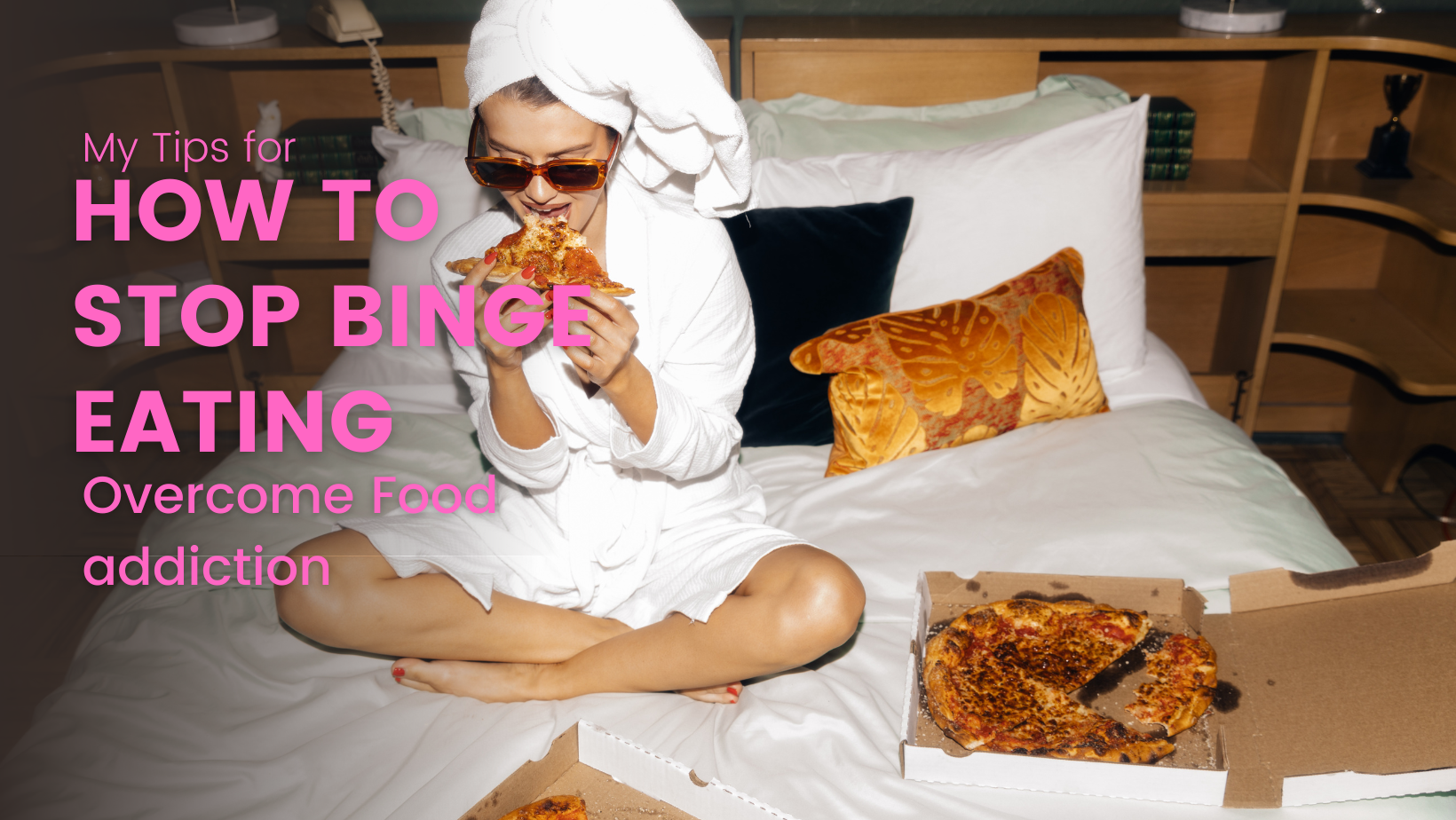

We’re all guilty of eating too much every now and then, whether it be during the holidays or too much fun at the weekend barbeque. But for many people, overeating or binge eating is a regular thing.
As an overweight child and teen, binge eating was a daily norm for me. I ate whatever I wanted, whenever I wanted, and however much I wanted. Even when it made me uncomfortably full.
But why do we binge eat and how can we stop? Keep reading to learn why your binge eating may be brought on by food addiction and what you can do to overcome it.
- Binge Eating’s Vicious Cycle
- Sugar, Fat, Salt
- Why We Binge Eat
- Personal Binge Eating Struggles
- How I Overcame Binge Eating
- You’ll Get There
Binge Eating’s Vicious Cycle
If you struggle with binge eating or overeating, you know the vicious cycle all too well. You eat a few potato chips which turns into eating the whole bag.
Then you go for a little something sweet which turns into half a carton of ice cream, which turns into another bag of potato chips, then a few chocolates, and on, and on, until you’re too full to continue.
Your overeating is a cause of a lot of shame. It’s keeping you from reaching your health and fitness goals and it makes you feel less in control of your life. You beat yourself up for not having enough discipline and willpower to control your binge eating urges.
Why can’t you just stop at one potato chip?
Sugar, Fat, Salt
Asking a binge eater why they can’t stop at one potato chip is like asking an alcoholic why they can’t just stop at one drink. It’s because both are addicts.
Food, in particular processed foods, are addicting. The reason you can’t stop at one potato chip is not simply because you lack willpower. It’s because the ingredients in those potato chips are so addicting that stopping at just one feels impossible.
Think about it, you never hear of someone binge eating on steamed broccoli, right?
Sugar, fat, and salt are the main ingredients in most Western diets. This is because the food industry understands the addictive nature of these 3 ingredients, especially when consumed together.
This perfect ingredient trifecta triggers pleasure centers in the brain, much like stimulant drugs. The result leads to food cravings and overconsumption, which keeps customers coming back for more.
Why We Binge Eat
There are many reasons why someone may binge eat consistently, including psychological problems like depression or anxiety. But I believe that most people’s overeating is caused by the vicious addictive cycle of processed food consumption.
I would even go so far as to say that some of their psychological issues could be intertwined with their food addiction. The shame and guilt we feel after overeating can certainly take a toll on our mental health.
Personal Binge Eating Struggles
When I finally made the decision to lose 100 pounds at 14, I knew my overeating was a problem. But I didn’t know how much of a problem it was until I tried to stop it.
I’d tell myself again and again that I would only stop at 1 piece of pizza this time or only eat half of my French fries at lunch, only to fail again, and again.
After many failed attempts to control my consumption of my favorite processed foods, I finally realized it was an uphill battle. The desire to overeat and binge on these kinds of foods was too strong, it was like I was addicted.
Finally, I realized that, like an addict, moderation wasn’t going to work for me. I had to stop eating these foods altogether if I wanted to reach my health and fitness goals.
How I Overcame Binge Eating
I overcame my cravings and desire to binge eat by phasing out the foods that triggered me to binge eat. Those foods were pretty much anything packaged, fried, too salty, or too sugary.
Instead, I focused on eating whole foods that were nutrient-dense and satisfying. I found that when I ate meals that were high in protein, fiber, and healthy fats, I felt fuller for longer and was less likely to crave unhealthy foods.
The more I abstained from my trigger foods, the less I craved them. The less I craved them, the more control I had over my hunger signals.
It Didn’t Happen Overnight
These changes didn’t happen overnight. I didn’t cut out my trigger foods and go cold turkey.
If I had tried to do that, I might have failed. I wasn’t strong enough yet to resist the urge to go back to my former eating habits.
Instead, I started slowly by cutting out one thing at a time and replacing it with a healthier version of what I craved. For example, if I wanted cookies, I’d instead eat a banana and peanut butter.
The banana and peanut butter would satisfy my sweet tooth but without spinning me into a sugar rush craze where my brain demanded more. I could then go on with my day satisfied, without the desire to run back into the kitchen and eat an entire batch of cookies.
Step By Step
I would continue phasing out trigger foods and processed foods in general, one at a time. I found that if I focused on just one food at a time, it was less overwhelming than trying to eat perfect right away.
The longer I went without these foods, the less I missed them and the easier it became to stay on track with my diet. But that didn’t mean I wasn’t tempted to stray. There were plenty of temptations in my way, which meant I had to find a solution around them.
Be Cautious of Your Environment
If someone is a recovering alcoholic, going to a bar is a bad idea. No matter if they go to the bar with the intention of “not drinking” and only go to hang out with friends.
Going to a bar and “not drinking” is not an option for an alcoholic, at least not early on in their sober journey. The temptation and the addiction is too strong. For someone who is trying to recover from an alcohol problem, most people would agree that staying out of environments where alcohol is present is the best idea.
Set Yourself Up for Success
The same logic should be applied to anyone trying to control their binge eating or are trying to stay on track with their diet. Putting yourself in situations where your trigger foods will be accessible is setting you up for failure.
At some point I realized that to stay on track with my diet, I would have to remove myself from certain situations or environments. For example, if my family were eating fast food or unhealthy snacks for dinner, I’d leave the room or go for a walk.
If friends wanted me to go with them to get ice cream or fast food, I would decline. Instead, I would invite them to do things that didn’t involve food, like go for a walk.
Plan for Setbacks
No matter how much progress I’d made or how hard I was trying, I had my share of setbacks. I set my intentions out everyday to do better, but sometimes I’d fail.
At first, I’d be too hard on myself and feel like a failure everytime I slipped up. I soon realized that this only made me feel worse. When I felt worse, I was more likely to slip up again.
Being too hard on yourself for making a mistake only leads to self sabotaging behavior. Thiswill ultimately keep you in a cycle of repeating your mistakes and hinder your progress.
Don’t Overcompensate
Though I’ve tried restricting my calories or over-exercising in the past to make up for my binge eating slip-ups, I realized early on that only made things worse. Restricting calories too much or over-exercising only made me hungrier, which made my desire to binge eat even stronger.
Eventually I learned that overcompensating doesn’t work. Instead, I’d move on with my meal plan or workout routine as normal. I may try to eat a little bit lighter or get a few extra minutes in at the gym, but not so much that I set myself up for another binge eating episode.
Acknowledge Your Mistake and Move On
Instead of dwelling on my slip-ups, I had to learn to get past them. If I had one bad night of binge eating, then I had one bad night of binge eating.
I’d wake up the next day and acknowledge my mistake and consider what I could have done better or how I could have avoided it. Then I’d move on.
Understand That It’s Not Forever
I think another key thing binge eaters or anyone trying to lose weight needs to understand is that abstaining from your favorite foods doesn’t have to be forever. It is possible to live a healthy lifestyle at a healthy weight while still enjoying your favorite foods now and then.
However, to get to the point where you are no longer addicted to food and can control your binge eating episodes better, you do need to stop eating these things temporarily.
Don’t Feel Deprived, Food Will Always Be There
Sometimes this idea of “giving up” or “depriving” yourself of your favorite foods is intimidating. It feels not only impossible to never eat these foods again but also boring.
Who wants to eat just boiled chicken and broccoli the rest of their life, right? But understand that there will be a day when you can enjoy your favorite foods without it ruining your health and fitness goals.
You just need time to build up your discipline, set up healthy habits, and retrain your brain to enjoy healthy, whole foods.
McDonalds, Dunkin Donuts, and fresh baked chocolate chip cookies aren’t going anywhere anytime soon. They will be right there where you left them when you’re ready to return to them.
You’ll Get There
Binge eating and overeating is something many of us struggle with. But it’s not simply because of your lack of willpower, food addiction also plays a huge role in our overconsumption.
By cutting out these foods from your diet and slowly switching to a less processed, whole-foods diet, your desires to binge eat will diminish.
You must also understand the factors that contribute to your binging and find ways to work around them.
It’s not an overnight process but by making small changes to your lifestyle and trying your best everyday, you will take charge of your binge eating and your life.
***
Thanks for reading! If you’d like to hear more about my weight loss story, check out my book 1 Year 100 Pounds.
Also, be sure to follow me on Instagram, Tik Tok, and YouTube for weight loss tips and workout motivation!
*Disclaimer: The information in this blog is based on my own personal opinion and experience. It is not intended to diagnose or treat binge eating disorder. If you feel you have an eating disorder, please consult a medical professional for help.*
*Some posts may contain affiliate links which the author will receive a small portion from sales*

Read more about Whitney’s 100 pound weight loss at 14. Learn how she transformed her life and follow her tips for how you can do it too.
Leave a Reply